Technology overview

Patient monitoring

Visual Patient.

A picture of the patient.
A new perspective on vital signs.

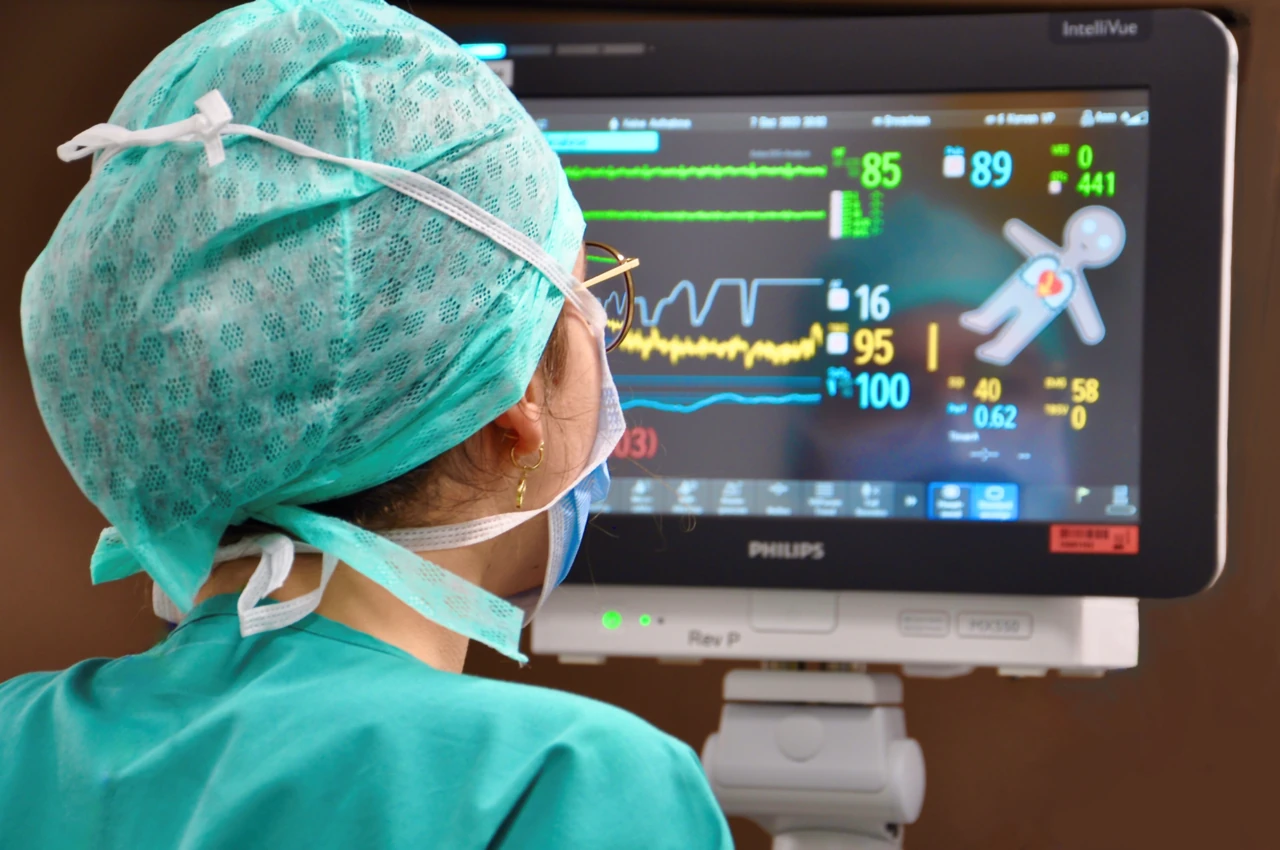
Visual Patient translates monitoring information into an animated patient avatar. Changes in the avatar’s appearance represent changes in physiological parameters, bringing multiple signals into a shared visual view.

A clinician viewing Visual Patient Avatar on a bedside monitor at University Hospital Zurich
Visual Patient Avatar in clinical practice. · Image credits

Explore & Simulate

See what changes.
Try it yourself.

Change vital signs and explore how the original research avatar responds.

Interactive vital signsOriginal research avatar
Open Visual Patient simulator

These interactive simulators are simplified research and teaching models using simulated example data. They are intended for education and demonstration, not for use in patient care or clinical decision-making.

See it in action

The idea in motion.

Teaching videos, demonstrations and perspectives from the research.

Introduction

English · 6:40 · Introduction

VPA Educational Video

Explainer series

Clinical practice & media

English · 0:45 · Clinical practice & media

Medica Trailer

0:33 · Clinical practice & media

Rio Hortega 2025 short

German · 2:57 · Clinical practice & media

WDR November 2023

Avatar cameos

Talks & interviews

Research perspectives

Community & events

Related work · avatar cameo

Industry perspective

Development story

Community events

Clinical perspectives

Community film

Talks & interviews

Learn the visual language

From first glance
to familiar practice.

Quick guides, infographics and teaching material in the original languages.

Publications from our group

Visual Patient
research.

28 publications and research documents coauthored by David W. Tscholl. Journal articles, protocols and preprints are identified individually.
Papers mentioning Visual Patient Avatar →

2026

JMIR Formative Research · Computer-based, quantitative, qualitative · Original research

Using a Wearable-Based Animated Patient Avatar to Improve Patients’ Perception of Vital Signs: Multicenter Computer-Based Study

Johannes Köhler, Max Ebensperger, Cynthia A Hunn, Arend Rahrisch, Achilles Delis, Florian Piekarski, Gregor Massoth, Florian J Raimann, Kai Zacharowski, David W Tscholl, Tadzio Raoul Roche

Supplementary material 3 files
6:00 · Research supplement

formative v10i1e84130 app2 (1)

2:38 · Research supplement

formative v10i1e84130 app3

BMJ Open · Peer-reviewed protocol: dual-centre, quasi-experimental pre-post observational study · Peer-reviewed protocol · Published protocols

Effects of the Visual Patient Avatar on vital sign deviations and audible alarm burden in perioperative care: a dual-centre, quasi-experimental pre-post large-scale observational study protocol (NewYork-Presbyterian/Weill Cornell and University Hospital Zurich)

Silis Y Jiang, Tadzio R Roche, Krzysztof Cybulski, Gaspar Dugac, Lukas Meier, Virginia E Tangel, Max Ebensperger, Andreas Maskos, Michael Tucci, Christoph B Nöthiger, Markus Kalisch, Zachary A Turnbull, David W Tscholl

Protocol; no comparative outcome results reported

Supplementary material 2 files

2025

BMJ Open · Study protocol · Peer-reviewed protocol · Published protocols

Evaluation of visual patient predictive for enhancing level 3 situation awareness: protocol for a multicentre randomised computer-based simulation and diagnostic accuracy study (true positive rate, precision, average lead time)

Cynthia Alexandra Hunn, Hannes Bruns, Sebastian Sahli, Luca Wachtendorf, Johannes Schäfer, Stefan Schwerin, Achilles Delis, Markus Kalisch, Gaspar Dugac, Arend Rahrisch, Max Ebensperger, Arian Karimitar, Gregor Massoth, Christopher Neuhaus, Alina Dubatovka, Christoph B Nöthiger, G. Gasciauskaite, Tadzio Raoul Roche, David W Tscholl

Protocol; comparative outcome results are not reported in this paper.

Supplementary material 3 files
11:24 · Research supplement

bmjopen-2025-December-15-12--inline-supplementary-material-1

2024

Bioengineering · Real-Life, user feedback · Original research

Qualitative Exploration of Anesthesia Providers’ Perceptions Regarding Philips Visual Patient Avatar in Clinical Practice

Cynthia A. Hunn, Justyna Lunkiewicz, Christoph B. Noethiger, David W. Tscholl, Greta Gasciauskaite

Supplementary material 5 files

Scientific Reports · Real-Life, user feedback · Original research

Survey-based qualitative exploration of user perspectives on the Philips Visual Patient Avatar in clinical situation management

Indre Radaviciute, Cynthia A. Hunn, Justyna Lunkiewicz, Petar Milovanovic, Jan F. Willms, Christoph B. Nöthiger, Emanuela Keller, David W. Tscholl, Greta Gasciauskaite

Supplementary material 4 files

Journal of Clinical Monitoring and Computing · Computer-based, quantitative · Original research

Avatar-based versus conventional patient monitoring with distant vision: a computer-based simulation study

Petar Milovanovic, Julia Braun, Cynthia Alexandra Hunn, Justyna Lunkiewicz, David Werner Tscholl, Greta Gasciauskaite

Supplementary material 2 files
6:40 · Research supplement

Supplementary Material Videa S1

2023

Scientific Reports · Computer-based, user feedback, quantitative · Original research

Avatar-based patient monitoring improves information transfer, diagnostic confidence and reduces perceived workload in intensive care units: computer-based, multicentre comparison study

Lisa Bergauer, Julia Braun, Tadzio Raoul Roche, Patrick Meybohm, Sebastian Hottenrott, Kai Zacharowski, Florian Jürgen Raimann, Eva Rivas, Manuel López-Baamonde, Michael Thomas Ganter, Christoph Beat Nöthiger, Donat R. Spahn, David Werner Tscholl, Samira Akbas

Supplementary material 5 files

Diagnostics · Computer-based, user feedback, quantitative, Visual Patient Predictive Frontend · Original research

Using Visual Patient to Show Vital Sign Predictions, a Computer-Based Mixed Quantitative and Qualitative Simulation Study

Amos Malorgio, David Henckert, Giovanna Schweiger, Julia Braun, Kai Zacharowski, Florian J. Raimann, Florian Piekarski, Patrick Meybohm, Sebastian Hottenrott, Corinna Froehlich, Donat R. Spahn, Christoph B. Noethiger, David W. Tscholl, Tadzio R. Roche

Supplementary material 2 files

Diagnostics · Computer-based, user feedback · Original research

User Perceptions of Avatar-Based Patient Monitoring for Intensive Care Units: An International Exploratory Sequential Mixed-Methods Study

Justyna Lunkiewicz, Greta Gasciauskaite, Tadzio Raoul Roche, Samira Akbas, Christoph B. Nöthiger, Michael T. Ganter, Patrick Meybohm, Sebastian Hottenrott, Kai Zacharowski, Florian Jürgen Raimann, Eva Rivas, Manuel López-Baamonde, Elisabeth Anna Beller, David Werner Tscholl, Lisa Bergauer

Diagnostics · Computer-based, eye-tracking, quantitative · Original research

The Visual Patient Avatar ICU Facilitates Information Transfer of Written Information by Visualization: A Multicenter Comparative Eye-Tracking Study

Julie Viautour, Lukas Naegeli, Julia Braun, Lisa Bergauer, Tadzio R. Roche, David W. Tscholl, Samira Akbas

Supplementary material 2 files

Children · Real-Life, user feedback · Original research

Pediatric Anesthesia Providers’ Perspective on the Real-Life Implementation of the Philips Visual Patient Avatar: A Qualitative Study

Justyna Lunkiewicz, Daniel Fries, Petar Milovanovic, Christoph B. Noethiger, David W. Tscholl, Greta Gasciauskaite

Supplementary material 3 files

Critical Care · Review · Reviews

Human-centered visualization technologies for patient monitoring are the future: a narrative review

Greta Gasciauskaite, Justyna Lunkiewicz, Tadzio R. Roche, Donat R. Spahn, Christoph B. Nöthiger, David W. Tscholl

Supplementary material 3 files
8:44 · Research supplement

Video S1 Visual Blood educational video

2:36 · Research supplement

Visual Clot Education English

2022

JMIR Serious Games · High-fidelity simulation, eye-tracking, quantitative · Original research

Visual Attention of Anesthesia Providers in Simulated Anesthesia Emergencies Using Conventional Number-Based and Avatar-Based Patient Monitoring: Prospective Eye-Tracking Study

Arsène Ljubenovic, Sadiq Said, Julia Braun, Bastian Grande, Michaela Kolbe, Donat R Spahn, Christoph B Nöthiger, David W Tscholl, Tadzio R Roche

Supplementary material 2 files
2:51 · Research supplement

Example sequence of the analyzed eye-tracking data.

10:48 · Research supplement

games v10i1e35642 app1

JMIR Human Factors · High-fidelity simulation, user feedback · Original research

User Perceptions of Different Vital Signs Monitor Modalities During High-Fidelity Simulation: Semiquantitative Analysis

Samira Akbas, Sadiq Said, Tadzio Raoul Roche, Christoph B Nöthiger, Donat R Spahn, David W Tscholl, Lisa Bergauer

Supplementary material 3 files
10:48 · Research supplement

Video of simulations scenario presenting Visual-Patient-avatar and Conventional monitor.

0:50 · Research supplement

Video with two examples of an animated Visual-Patient-avatar.

Diagnostics · Computer-based, user feedback, quantitative · Original research

Improving Visual-Patient-Avatar Design Prior to Its Clinical Release: A Mixed Qualitative and Quantitative Study

Doreen J. Wetli, Lisa Bergauer, Christoph B. Nöthiger, Tadzio R. Roche, Donat R. Spahn, David W. Tscholl, Sadiq Said

Supplementary material 4 files

Diagnostics · Meta-analysis, quantitative, qualitative · Original research

Improved Task Performance, Low Workload, and User-Centered Design in Medical Diagnostic Equipment Enhance Decision Confidence of Anesthesia Providers: A Meta-Analysis and a Multicenter Online Survey

Alexandra D. Budowski, Lisa Bergauer, Clara Castellucci, Julia Braun, Christoph B. Nöthiger, Donat R. Spahn, David W. Tscholl, Tadzio R. Roche

Supplementary material 3 files
5:56 · Research supplement

Supplementary Materials Video S1

3:23 · Research supplement

Supplementary Materials Video S2

5:27 · Research supplement

Supplementary Materials Video S3

2021

British Journal of Anaesthesia · High-fidelity simulation, quantitative · Original research

Avatar-based patient monitoring in critical anaesthesia events: a randomised high-fidelity simulation study

Tadzio R. Roche, Sadiq Said, Julia Braun, Elise J. C. Maas, Carl Machado, Bastian Grande, Michaela Kolbe, Donat R. Spahn, Christoph B. Nöthiger, David W. Tscholl

Supplementary material 3 files

2020

BMC Medical Informatics and Decision Making · Computer-based, quantitative · Original research

Avatar-based versus conventional vital sign display in a central monitor for monitoring multiple patients: a multicenter computer-based laboratory study

Olivier Garot, Julian Rössler, Juliane Pfarr, Michael T. Ganter, Donat R. Spahn, Christoph B. Nöthiger, David W. Tscholl

Supplementary material 2 files
3:06 · Research supplement

12911 2020 1032 MOESM3 ESM

Journal of Medical Internet Research · Computer-based, eye-tracking, quantitative · Original research

The Mechanisms Responsible for Improved Information Transfer in Avatar-Based Patient Monitoring: Multicenter Comparative Eye-Tracking Study

David Werner Tscholl, Julian Rössler, Lucas Handschin, Burkhardt Seifert, Donat R Spahn, Christoph B Nöthiger

Supplementary material 3 files

JMIR Medical Education · Classroom-based, quantitative · Original research

Comparing Classroom Instruction to Individual Instruction as an Approach to Teach Avatar-Based Patient Monitoring With Visual Patient: Simulation Study

Julian Rössler, Alexander Kaserer, Benjamin Albiez, Julia Braun, Jan Breckwoldt, Donat Rudolf Spahn, Christoph Nöthiger, David Werner Tscholl

Supplementary material 2 files

Journal of Medical Internet Research · Meta-analysis, quantitative · Original research

Validation of the Raw National Aeronautics and Space Administration Task Load Index (NASA-TLX) Questionnaire to Assess Perceived Workload in Patient Monitoring Tasks: Pooled Analysis Study Using Mixed Models

Sadiq Said, Malgorzata Gozdzik, Tadzio Raoul Roche, Julia Braun, Julian Rössler, Alexander Kaserer, Donat R Spahn, Christoph B Nöthiger, David Werner Tscholl

Supplementary material 4 files

2019

Journal of Medical Internet Research · Computer-based, eye-tracking, quantitative · Original research

Avatar-Based Patient Monitoring With Peripheral Vision: A Multicenter Comparative Eye-Tracking Study

Juliane Pfarr, Michael T Ganter, Donat R Spahn, Christoph B Noethiger, David W Tscholl

Supplementary material 2 files

2018

External literature · 17 publications

Papers mentioning
Visual Patient Avatar.

Publications that discuss or cite Visual Patient Avatar research, without David W. Tscholl as a coauthor. Summaries distinguish direct discussion from background citations. These papers are excluded from our group’s publication count.

2025 · Journal of the Intensive Care Society 26(1):96–104 · Narrative review · Direct discussion

Digital health interventions in adult intensive care and recovery after critical illness to promote survivorship care

da Silva AA, Merolli M, Fini NA, et al.

Describes patient avatars as a way to present vital signs holistically and help clinicians recognize abnormalities. Cites Visual Patient eye-tracking and user-perception research within a broader review of digital health in intensive care.

2025 · World Journal of Methodology 15(3):100459 · Systematic review · Direct discussion

Visual avatar to increase situational awareness in anaesthesia: Systematic review of recent evidence

Tramontana A, Rulli M, Falegnami A, Bilotta F

Reviews 14 studies of Visual Patient Avatar published between 2018 and 2023, covering vital-sign perception and recall, cognitive workload, and user acceptance. Also identifies areas for further development in visualization and data integration.

2024 · Frontiers in Space Technologies 5:1423138 · Review · Direct discussion

Virtual medical astronaut avatars for future deep space missions

Urlings C, Baselet B, Tabury K, Baatout S

Discusses Visual Patient research while exploring how medical avatars could support remote health monitoring during spaceflight. Proposes potential applications for future missions; it does not test Visual Patient in space.

2021 · British Journal of Anaesthesia 126(5):913–915 · Editorial · Direct discussion

Data visualisation and cognitive ergonomics in anaesthesia and healthcare

Craig S. Webster, Jennifer M. Weller

Discusses the cognitive rationale for combining vital signs in a patient avatar, drawing on Roche and colleagues’ simulation study. Considers the advantages of intuitive visual integration alongside limitations such as missing trends and the role of conventional monitoring.

2021 · International Journal of Nursing Studies 124:104086 · Meta-narrative review · Direct discussion

Situation awareness and the mitigation of risk associated with patient deterioration: A meta-narrative review of theories and models and their relevance to nursing practice

Walshe N, Ryng S, Drennan J, et al.

Examines technologies that support situation awareness in nursing, including animated patient avatars and several Visual Patient studies. Discusses the findings within their laboratory and simulation settings.

2019 · Yearbook of Medical Informatics 28(1):78–80 · Research selection and review · Direct discussion

Human Factors and Sociotechnical Issues

Sylvia Pelayo, Yalini Senathirajah; Section Editors for the IMIA Yearbook Section on Human Factors and Organizational Issues

Selects the 2018 animated patient-avatar study among four notable papers in human factors and organizational issues in medical informatics. Summarizes its approach to making vital-sign information easier to perceive.
The original collection.

Explore the source material shared through visualpatient.org.

Open the Visual Patient collection